

Article: Why choose quality clothing for babies and children?

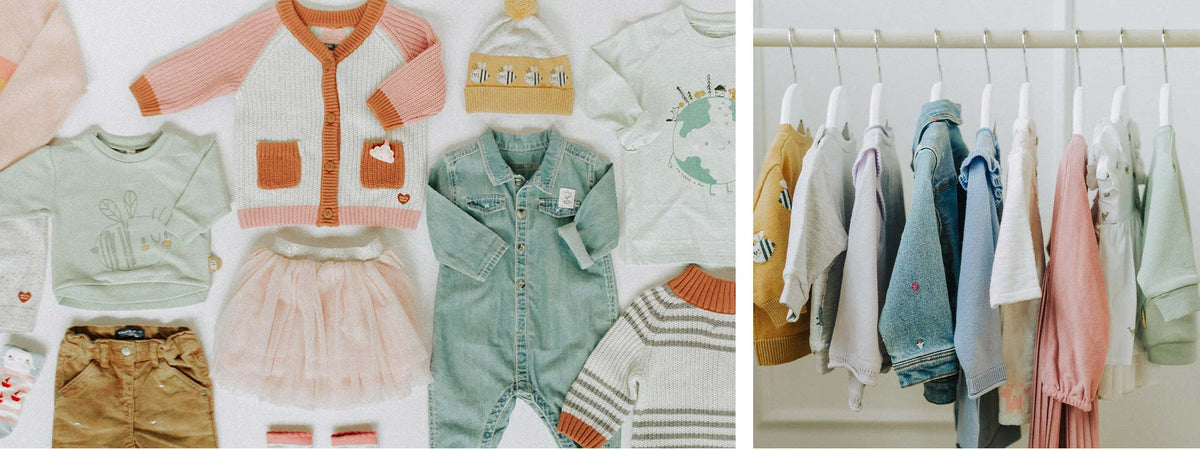
Why choose quality clothing for babies and children?
Why do some clothes retain their shape and softness longer than others? Behind a quality garment lie many details that may not necessarily be noticeable at first glance: the choice of fibers, the fabric construction, the precision of the patterns, the finishing, and the expertise of the manufacturers.
Between days at daycare, outdoor play, and repeated washings, children's clothes are put to the test. Choosing quality clothing for babies and children means looking beyond style and price to prioritize comfort, durability, and longevity.
At Souris Mini, a Quebec-based company founded in 1989, this attention to detail has been part of how we design clothing for over 35 years.
1. Quality starts with the choice of materials
Two sweaters may look almost identical yet have significant differences in quality.
The fabric composition is a first clue, but it doesn't tell the whole story. The quality of the fibers, the yarn manufacturing, the weaving or knitting, and the finishing treatments also influence its feel, softness, durability, and how it holds up over time.
Natural fibers, such as cotton, are particularly appreciated in baby and children's clothing for their softness and breathability.
However, a garment made of cotton is not automatically a high-quality garment. The fabric construction and the care taken in its making are just as important.
At Souris Mini, we place great importance on the choice of materials, especially natural fibers, seeking a balance between comfort, durability, and everyday use.
Fabric thickness: a detail that can make a difference
Have you ever noticed that some T-shirts hold their shape better than others?
The thickness and density of a material can influence its drape, appearance, and resistance to wear.
At Souris Mini, we pay particular attention to the thickness of our T-shirts. We look for materials that have substance while retaining the softness needed to allow children to move freely.
However, a thicker fabric is not always better: a lightweight, well-designed material can be ideal for warm days.
Quality means choosing the right material for the right garment above all else.
2. Weaving and knitting: quality built into the yarn
The making of a garment begins long before it is sewn.
Fibers are first transformed into yarn, then assembled to form a textile material. Depending on the type of garment, it can be woven or knitted.
Jersey, for example, is a knitted material frequently used for T-shirts and everyday clothing. Its knit structure gives it a softness that is appreciated for dressing children.
The consistency of the yarns and stitches, as well as the quality of the textile finishing, influences the fabric's appearance and performance.
These characteristics can play a role in pilling, distortion, and how the garment holds up after several uses.
This is why quality is not judged solely by the softness felt during the first try-on.
3. Patterns designed for comfort and freedom of movement
A garment can be made from an excellent material but remain uncomfortable if its cut is not suitable.
The pattern forms the basis of its construction. It determines the proportions, lengths, ease, and how the garment follows the body's movements.
For a baby, this includes considering the space needed for a diaper, ease of dressing, and comfort in different positions.
For an older child, the cut must allow them to run, climb, sit, and play freely.
At Souris Mini, pattern development is an integral part of our design process. Proportions and adjustments are carefully considered for the different stages of childhood.
4. The grainline: an invisible but important detail
Have you ever noticed that a pair of jeans seems to twist around the leg, to the point where the seam ends up at the front instead of the side?
This phenomenon can be linked not only to the orientation of the fabric when cut but also to its construction and how it behaves after washing.
This is where the grainline comes into play, which corresponds to the intended orientation of the fabric or knit during construction.
Respecting the grainline contributes to the garment's proper drape and allows the material to behave as expected. An incorrectly oriented cut can lead to distortion and impair the garment's appearance over time.
At Souris Mini, we pay particular attention to this precision when making our garments. It is one of those details that may not necessarily be noticed at the time of purchase, but which can make all the difference in the quality and fit of a garment.
5. Manufacturers' expertise: an essential element of quality
The quality of a garment also depends on the experience and working methods of those who make it.
The choice of a manufacturer should therefore not rest solely on production costs.
Their experience, equipment, teams, and ability to produce meticulous finishing are all elements to consider.
How Souris Mini chooses its manufacturers
At Souris Mini, the selection of factories is a rigorous process.
Before choosing a manufacturing partner, we look into their history, years of experience, the brands they work with, as well as their equipment and teams.
Each selected factory is personally visited by our founder, Annie Bellavance.
These visits allow us to meet the teams, observe the working methods, and better understand their expertise.
We also pay particular attention to manufacturers who have experience working with European brands known for the quality of their clothing.
This experience is an asset, but it never replaces our own evaluation.
Ongoing monitoring during manufacturing
The work does not stop once the manufacturer has been selected.
Souris Mini also benefits from the presence of a team in China that has in-depth knowledge of its sewing workshops.
This team conducts regular visits and unannounced inspections to observe production, resolve technical difficulties, and work with manufacturers to improve garment construction.
This close proximity allows us to maintain constant dialogue and ensure that our quality requirements are met.
6. Finishing: the little details that make a big difference
When examining a child's garment, several details can reveal the care taken in its making.
Regular stitching, a well-constructed collar, a functional closure, or meticulous interior finishing all contribute to the overall comfort and quality.
Decorative details also require expertise.
Embroidery, appliqué, color arrangement, or an original illustration may require several development and construction steps.
At Souris Mini, these elements are part of our creative world and the attention we pay to every collection.
The quality of a garment is therefore not limited to its material: it is found in all the choices that guided its creation.
7. Why do some garments withstand washing better?
Baby and children's clothing is washed frequently. How it behaves after several care cycles is therefore an important indicator of quality.
Several factors can influence how it holds up:
- The quality of the fibers and yarns.
- The fabric construction.
- The precision of the cut.
- The strength of the seams.
- The treatments and finishing applied to the material.
- Adherence to care instructions.
Pre-washing garments
At Souris Mini, pre-washing is part of the preparation process for our garments.
It allows the material to relax and helps reduce some of the dimensional changes that could occur during the first washings at home.
This step can also influence the feel of the garment.
However, pre-washing does not guarantee the complete absence of shrinkage or distortion. Proper care remains essential.
8. Buying quality clothing: a choice that can be economical
The purchase price is not the only factor to consider when choosing children's clothing.
A quality garment that retains its good condition can be worn more frequently and eventually passed on to another child.
Let's take a simple example:
- A $20 sweater worn 10 times costs $2 per use.
- A $35 sweater worn 35 times costs $1 per use.
This example illustrates the principle of cost per use.
A more expensive garment to buy can therefore become advantageous when it is actually worn and retains its qualities over time.
The important thing remains to choose pieces suited to the child's needs, activities, and daily life.
9. Clothing that can be passed from one child to another
Children sometimes grow faster than their clothes wear out!
When a garment remains in good condition, it can continue its story with a younger brother, a younger sister, or another family.
This possibility of passing it on encourages more thoughtful consumption and helps extend the use of already manufactured clothing.
At Souris Mini, this philosophy is part of our history: creating clothing that children love to wear and that families enjoy keeping and sharing.
The actual lifespan of a garment naturally depends on its use and care, but the choices made from its design can help extend it.
10. How to recognize a quality garment in a store?
Here are a few simple things to check before buying a garment for a baby or child:
- The material: is it pleasant to the touch and suitable for the season?
- The cut: does it allow for free movement?
- The seams: do they look even and well-made?
- The finishing: are the collars, cuffs, and closures neat?
- The fabric: does it have the desired softness and hold?
- The care: do the recommendations match your daily life?
A quality garment is not recognized by a single detail, but by the sum of its characteristics.
Quality: a story of expertise and attention to detail
Choosing quality clothing for babies and children means looking beyond style and price.
It means understanding the importance of materials, pattern design, manufacturing, and finishing, all of which contribute to comfort and durability.
Since 1989, Souris Mini has cultivated this expertise with particular attention to the details that make a difference, even when they are not visible at first glance.
Because a well-thought-out garment can accompany first discoveries, great adventures, and sometimes, the memories of several children.
Discover our mission and expertise.
Frequently asked questions about the quality of children's clothing
How to recognize a quality garment for a baby?
A quality garment for a baby is distinguished notably by a comfortable material, neat seams, a cut suited to movement, and well-made finishing. Manufacturing quality and ease of care are also important.
Is a 100% cotton garment always of better quality?
No. Quality also depends on the fibers used, the yarn manufacturing, the fabric construction, and the finishing. Two garments made of cotton can have different characteristics.
Why do some garments shrink in the wash?
Shrinkage can depend on the fibers, the fabric construction, the treatments applied during manufacturing, and the washing and drying conditions. Pre-washing can help reduce some dimensional changes, without eliminating them completely.
Why can quality clothing last longer?
Suitable materials, careful construction, and sturdy finishing can help preserve the comfort and appearance of a garment over time. Its care also plays an important role.
Is it more economical to buy quality clothing for children?
It can be when a garment is worn regularly, retains its good condition, and can be passed on to another child. The cost per use allows for a better assessment of its long-term value.